
🧠 How Relationships Shape Your Brain?
And Why We Keep Showing Up to Holiday Dinners, Even When They Are a Little Chaotic

Okay, someone has to say it. Holiday dinners are not always the most fun experiences on the planet (Except in my family of course - hi Mom and Dad who are probably reading this right now!). This time of year people will fly across continents, spend days cooking, and rearrange entire schedules just to sit in a room with relatives and friends, whether it is for Thanksgiving, Hanukkah, Christmas, or any other cultural celebration. Sometimes these people can be wonderful, but they can also be complicated, intense, or all three at once. These gatherings with family and friends can be loud, emotional, and occasionally overwhelming, yet we keep showing up for them every single year.
So why do we do it?
Religious or social tradition is the simple answer, but perhaps there is a deeper rationale behind the tradition itself. If you ask psychologists who study happiness, they certainly believe so. If there is one thing that decades of psychological research on happiness and well being show with impressive consistency, it is that social relationships are a central factor in human happiness, often more influential than a raise at work or a promotion.
I know that buying a new car sounds more exciting than flying out to meet relatives who live far from Philadelphia, but neuroscience and psychology suggest that in the long run, connecting with those relatives is more important than you might think.
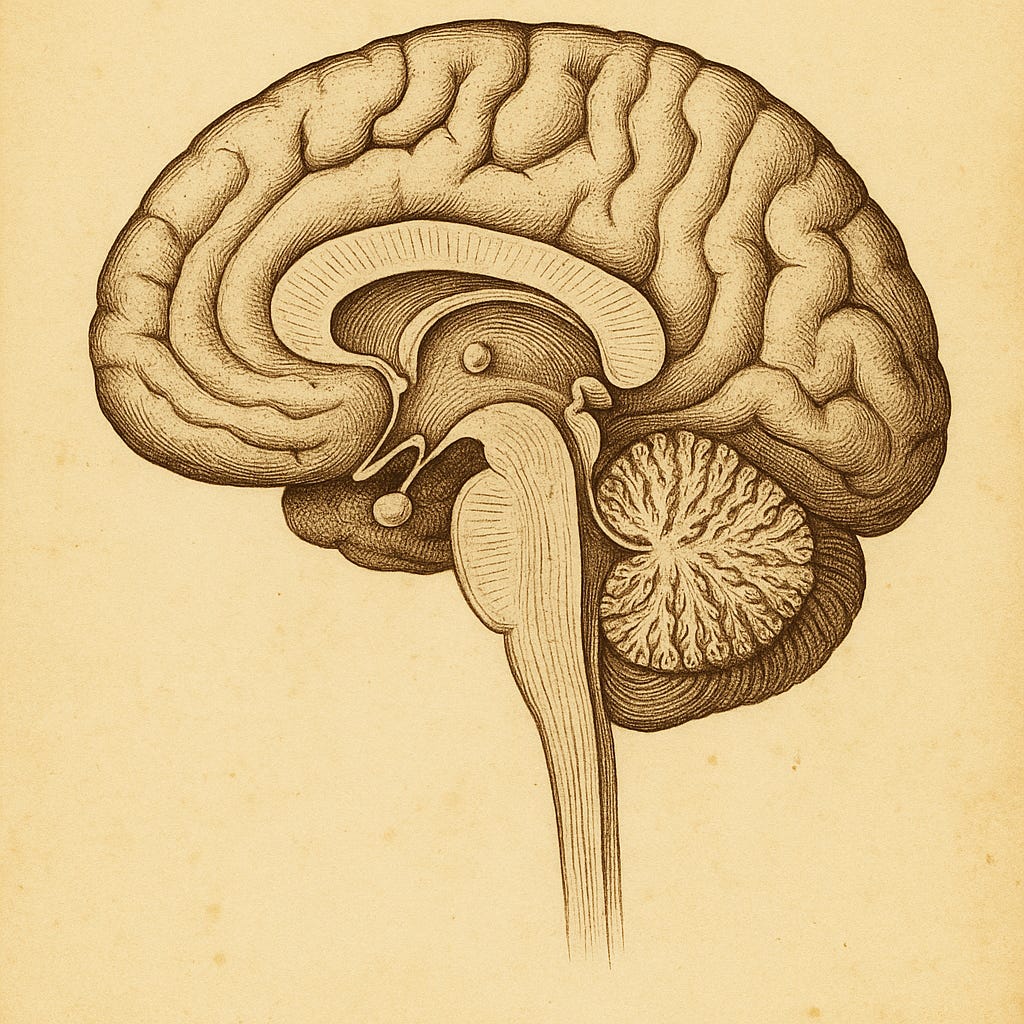
The medial prefrontal cortex - a region that often becomes engaged during social situations. It helps us interpret what others may feel and keep track of important relationships. It is part of a broader network in the brain that is also involved in the sense of comfort many people experience when they spend time with others.
A large body of research makes one point remarkably clear: meaningful relationships account for a large share of what shapes human happiness. It sounds almost obvious, but precisely because it feels obvious, it is incredibly easy to forget. Again and again, studies show that social connection is one of the strongest and most consistent predictors of well being. One common finding is that people routinely rank their social interactions as some of the most enjoyable parts of the day, in many cases more than leisure activities done alone. Long term findings from the Harvard Study of Adult Development echo this pattern, showing that close relationships predict both happiness and health more reliably than wealth or professional success.
The influence of relationships extends far beyond emotion. Large international surveys show that simply being able to answer yes to the question, do you have someone you can count on in times of need, predicts life satisfaction more strongly than dramatic increases in income in many parts of the world. This single measure of perceived support often outperforms money, career status, and even physical safety in forecasting well being.
Relationships may even show up in the body. Social ties can help buffer stress. People who live in high trust communities experience smaller drops in life satisfaction when facing illness, unemployment, or discrimination compared to people in low trust environments. Some studies find that holding a loved one’s hand during a stressful moment is linked with calmer neural responses to threat. Other research suggests that people with broader social networks tend to get sick a bit less often and may show certain patterns in the immune system that correlate with social connection, although scientists are still working to understand how and why.
So if we know that human relationships are so important for our well being, why do we sometimes push them to the side? Why do we stay an extra hour at the office instead of meeting a friend? And why do people often worry more about the material aspects of retirement than about nurturing the meaningful relationships they will want and need when that day eventually arrives? There is no single simple answer, but one reason is that our brain prefers things it can measure. A raise has a number. A project has a deadline. But spending an hour with a friend creates no visible score. There is no chart showing your bond improved by twelve percent this week.
The irony is that the parts of life that matter most for our long term happiness are often the ones without numbers, and for that reason we tend to neglect them. That may be one of the quiet gifts of the holiday season. It gives us permission to invest in family and relationships, even when life feels crowded. It invites us to bring the people who matter back to the center of our attention. So yes, the evening of a holiday dinner might be loud and someone will definitely overcook something, but your brain will thank you anyway.
Me too!
Love this article !!!
Loved your column!